In today’s fast-paced business landscape, clear and concise board reports are crucial for effective decision-making. A well-structured board report format template helps board members quickly grasp key information, identify trends, and make informed decisions. In this article, we’ll explore the essential elements of an effective board report format template, tailored for Asian businesses.
1.
Clear Objectives
A board report should begin with a clear statement of objectives, outlining the purpose and scope of the report. This helps board members understand the focus of the report and facilitates meaningful discussions. For instance, the objective section might state, “This report provides an update on the company’s financial performance for Q1, highlighting key achievements and challenges.”
2.
Executive Summary
The executive summary provides a condensed overview of the report’s key findings, providing board members with a quick snapshot of the report’s contents. This section should be concise, yet informative, and avoid technical jargon or complex terms. Aim for a summary that’s approximately 100-150 words.
3.
Key Performance Indicators (KPIs)
KPIs are essential metrics that measure a company’s progress toward its objectives. Include relevant KPIs in the report, such as revenue growth, customer acquisition rates, or employee engagement metrics. Visualize these data points using charts, graphs, or tables to facilitate easy interpretation.
4.
Financial Performance
The financial section of the board report should include an update on the company’s financial performance, including income statements, balance sheets, and cash flow statements. Clearly highlight any variances, positive or negative, and provide context for these changes.
5.
Business Operations
This section should provide an update on the company’s operational performance, including production, logistics, and supply chain management. Discuss any challenges or successes, and highlight areas for improvement.
6.
Marketing and Sales
The marketing and sales section should include an update on the company’s marketing efforts and sales performance. Discuss key initiatives, such as advertising campaigns, social media engagement, or trade show appearances.
7.
Employee Engagement and Development
Employee engagement and development is critical for a company’s long-term success. Include metrics on employee satisfaction, turnover rates, and training programs. Highlight any initiatives aimed at improving employee morale or performance.
8.
Risk Management
The risk management section should identify and assess potential risks facing the company, such as market volatility, regulatory changes, or supply chain disruptions. Discuss mitigation strategies and contingency plans.
9.
Recommendations and Action Items
The board report should conclude with a clear set of recommendations and action items for the board’s consideration. This might include specific strategies for addressing challenges or opportunities, or recommendations for future reporting.
10.
Appendices and Supporting Documents
Finally, include any appendices or supporting documents that provide additional context or information, such as detailed financial reports, market research studies, or external consultant reports.
By incorporating these essential elements into your board report format template, you’ll be able to create clear, concise, and informative reports that provide value to your board members. Remember to tailor your report to your company’s specific needs and priorities, and to use visual aids to facilitate easy understanding.
26+ HR Examples To Download
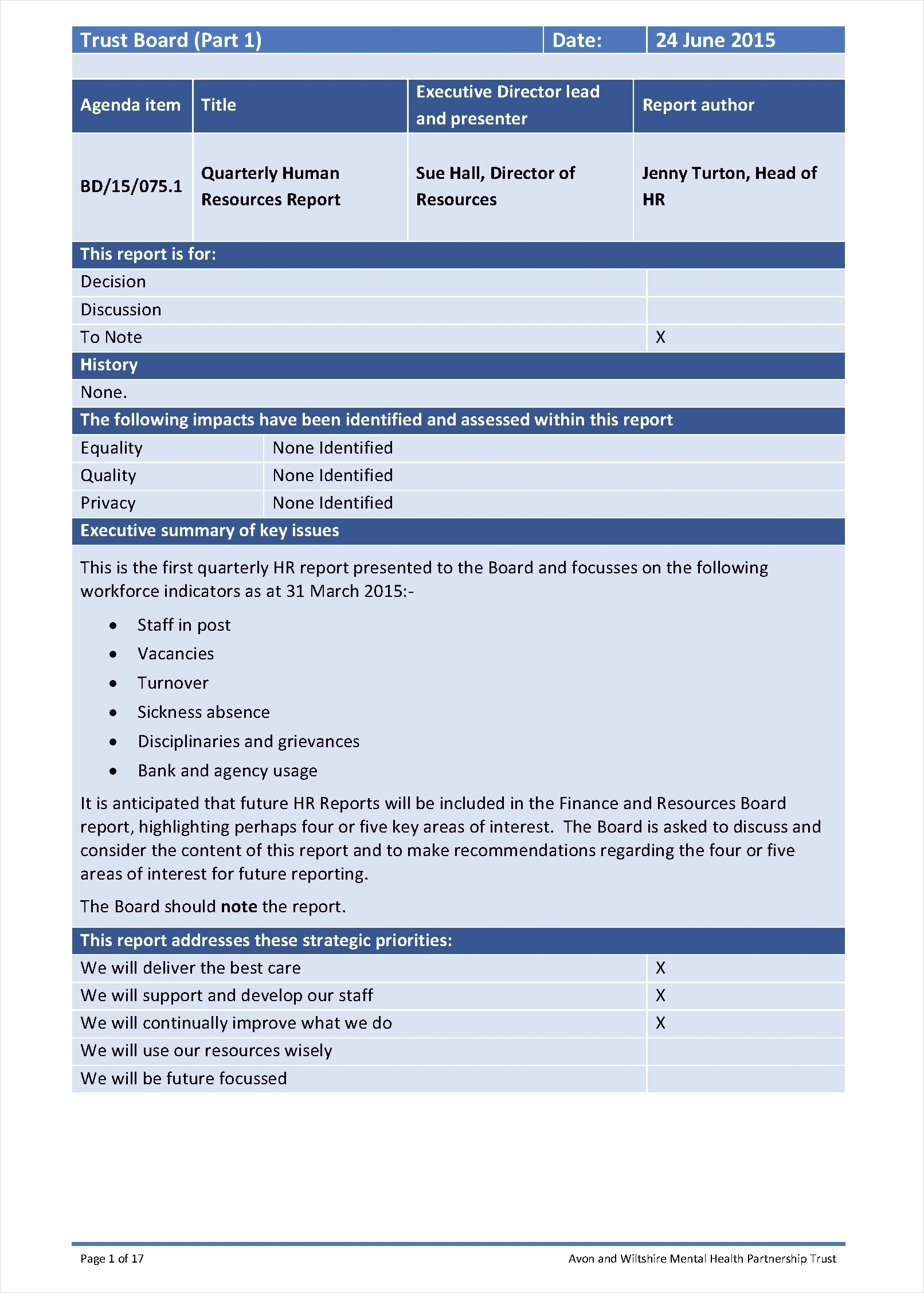
Board Report Template In Word, Apple Pages


