For those who have struggled to craft a well-structured summary response essay, this guide is for you. A summary response essay is a crucial writing task that requires students to distill complex ideas into a concise and coherent summary. This template is designed to help you navigate the process with ease and produce high-quality work every time. Here are the essential steps to create a summary response essay template:
1. Understand the Prompt
The first step in writing a summary response essay is to carefully read and understand the prompt. Break down the question into its constituent parts and identify the key concepts and terminology. Ask yourself: What are the main ideas, arguments, or perspectives being presented? What are the key terms and concepts related to the topic?
2. Read and Analyze the Source Material
Once you have a clear understanding of the prompt, it’s time to read and analyze the source material. Engage critically with the text by taking notes, highlighting key points, and identifying areas where you need further clarification. As you read, ask yourself: What are the main arguments or claims being made? What evidence is provided to support these claims?
3. Distill the Main Ideas
The next step is to distill the main ideas from the source material. Look for the central thesis or argument, and identify the key points that support it. Ask yourself: What are the main arguments or claims being made? What evidence is provided to support these claims?
4. Create an Outline
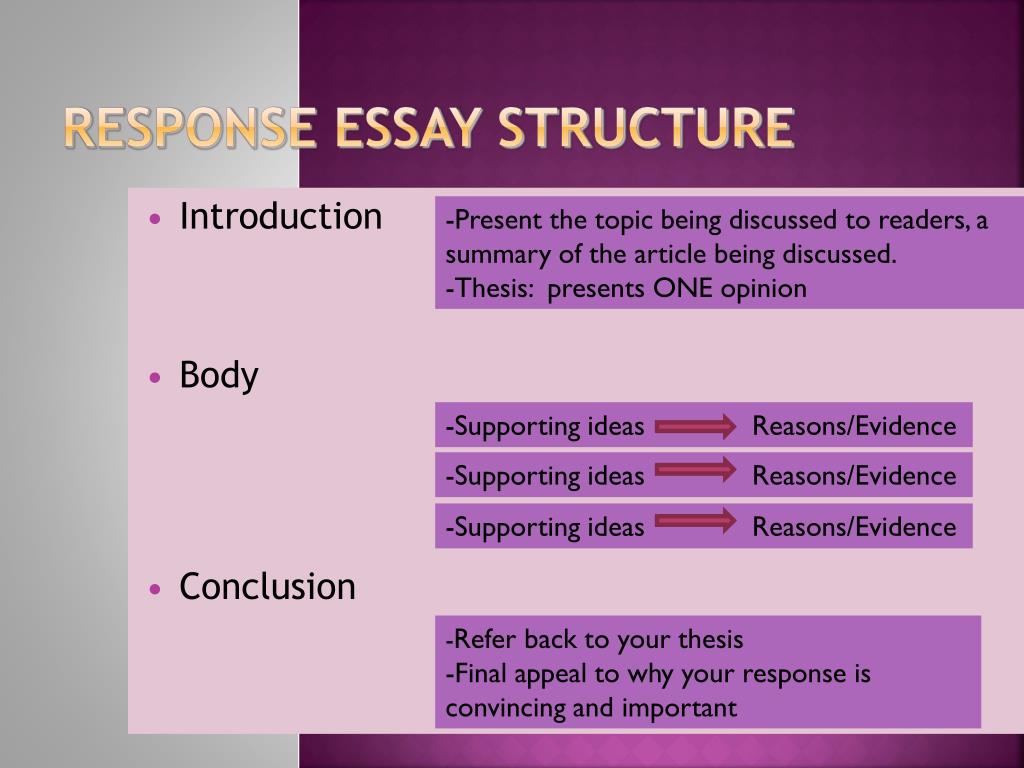
Develop a basic outline that outlines the main ideas, arguments, and supporting evidence. This will serve as a roadmap for your summary response essay. Your outline should include the following components: introduction, summary, analysis, and conclusion.
5. Write a Clear and Concise Introduction
Begin your summary response essay with a clear and concise introduction. Introduce the topic, provide some background information, and set the tone for the rest of the essay. Your introduction should include the following elements: a thesis statement, a hook, and a background.
6. Provide a Precise and Accurate Summary
The bulk of your summary response essay will be a precise and accurate summary of the source material. Use your outline as a guide and summarize the main ideas, arguments, and supporting evidence. Avoid using quotes or direct references, and focus on rephrasing the information in your own words.
7. Provide Critical Analysis and Evaluation
Once you have provided a summary of the source material, it’s time to provide critical analysis and evaluation. Engage critically with the text by identifying areas of agreement and disagreement. Ask yourself: What are the strengths and weaknesses of the argument? What evidence is provided to support the claims? What alternative perspectives might there be?
8. Use Transition Words and Phrases
Effective summary response essays use transition words and phrases to connect ideas, sentences, and paragraphs. Use transitional words and phrases like “however,” “in addition,” and “nevertheless” to link your ideas together and create a cohesive narrative.
9. Edit and Revise
Once you have completed your summary response essay, it’s time to edit and revise. Review your work for clarity, coherence, and accuracy. Ask yourself: Is my summary accurate and precise? Have I provided sufficient analysis and evaluation? Are my arguments well-supported?
10. Proofread for Grammar and Mechanics
The final step is to proofread your summary response essay for grammar, mechanics, and punctuation. Use your writing tools and software to identify and correct any errors. Once you have proofread your work, it’s ready to be submitted.
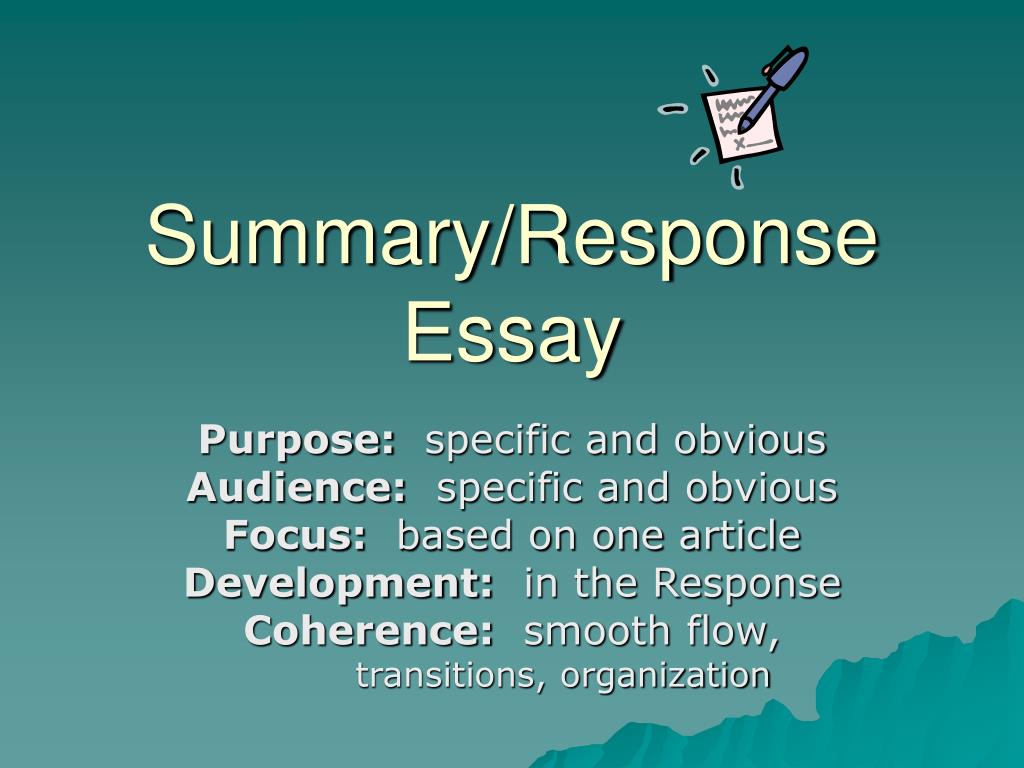
PPT – Summary/Response Essay PowerPoint Presentation, Free Download
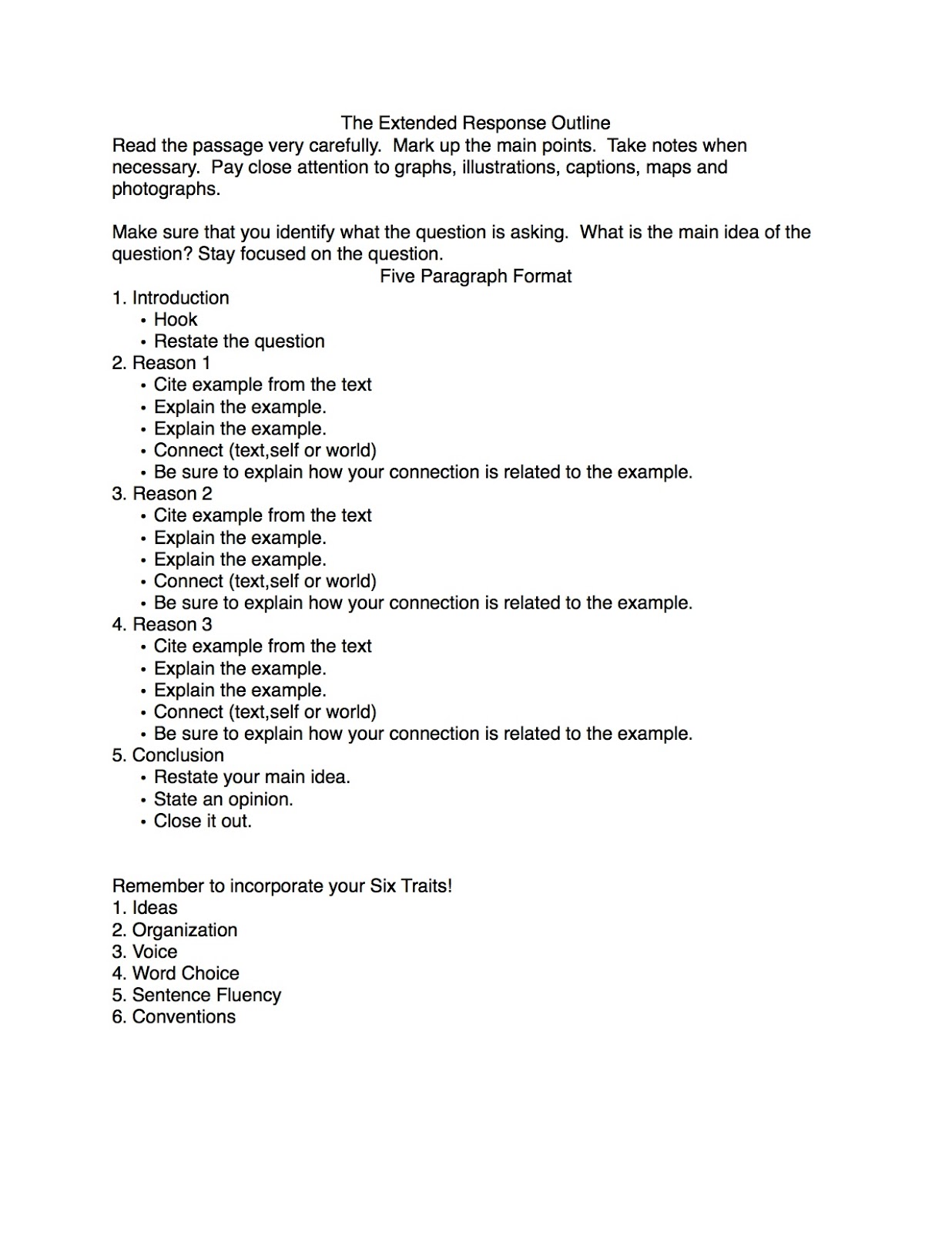
How To Write A Response Paper – Paperstime Response Paper Examples
PPT – SUMMARIZING AND RESPONDING PowerPoint Presentation, Free Download
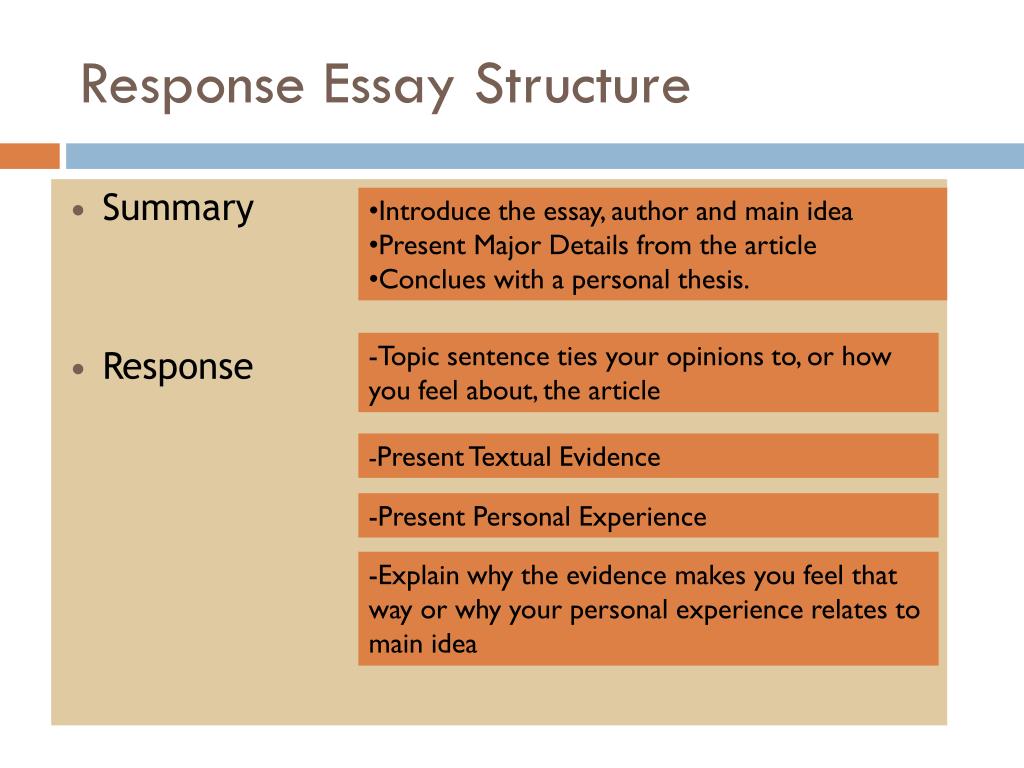
PPT – Summarizing And Responding PowerPoint Presentation, Free Download